
Short answer: a little. All kombucha contains trace amounts of alcohol because it is fermented. Kombucha sold as a non-alcoholic drink, including every bottle and keg of Springs Culture, stays under 0.5% alcohol by volume.
Where the Alcohol Comes From
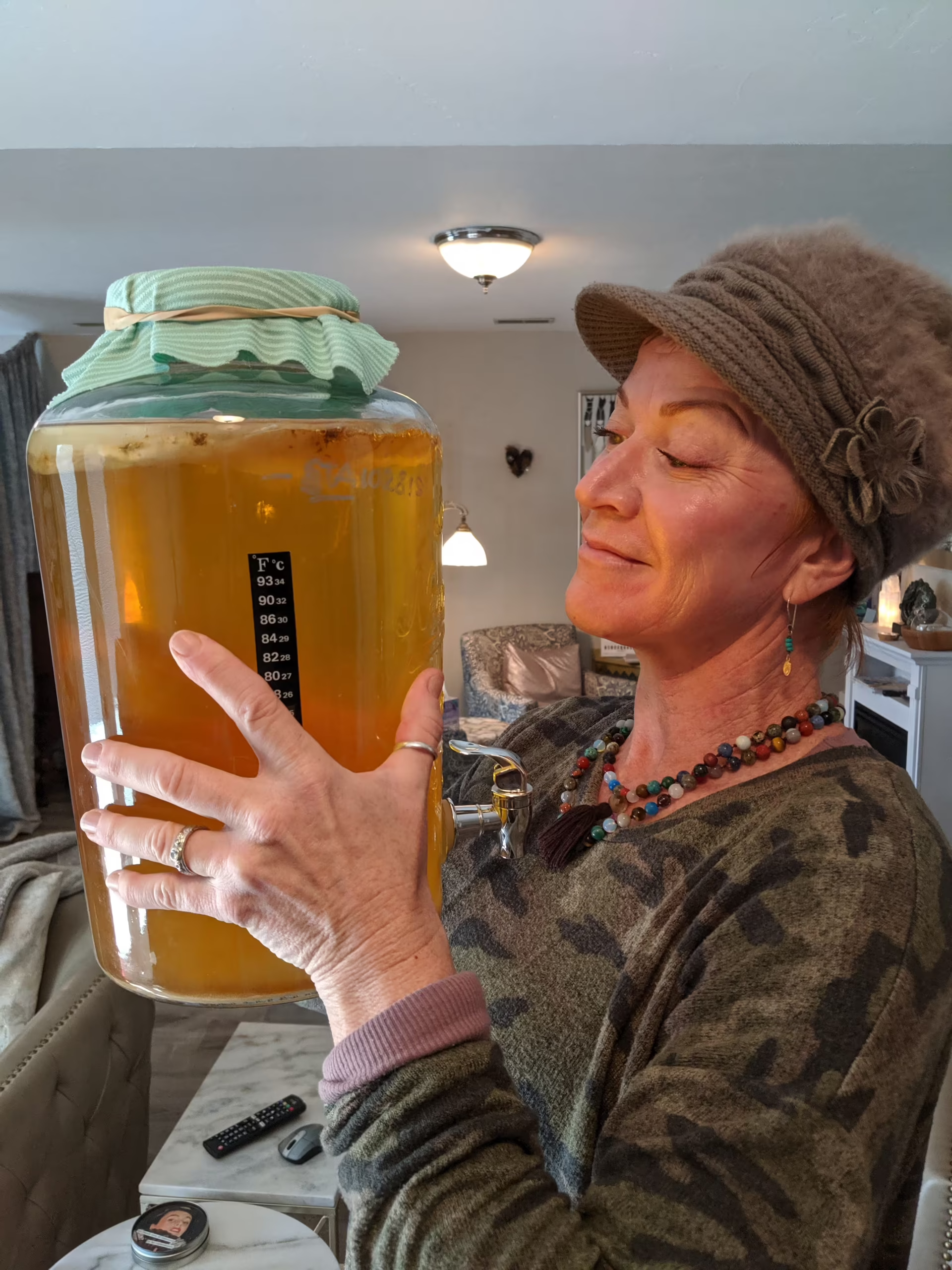
Kombucha starts as sweet tea. We add a SCOBY, the culture of bacteria and yeast that does the brewing. The yeast eats the sugar and makes carbon dioxide and a small amount of alcohol. The bacteria then eat most of that alcohol and turn it into the acids that give kombucha its tang.
That hand-off is the whole trick. The yeast and bacteria work together, so the alcohol gets made and used up at the same time. A well-run brew ends up tart and fizzy with only a trace left behind.
The 0.5% Line
In the United States, the federal Alcohol and Tobacco Tax and Trade Bureau (TTB) treats kombucha that reaches 0.5% alcohol by volume or more as an alcohol beverage. Below that line it is sold like any other non-alcoholic drink. For comparison, many non-alcoholic beers sit in the same under-0.5% range.
Some brands make “hard kombucha” on purpose, fermenting it further to land somewhere near beer strength. That is a different product, sold and labeled as alcohol.
Why Your Bottle Lives in the Fridge
Springs Culture is raw and unpasteurized, which means the culture is still alive in the bottle. Left warm, it keeps fermenting: more fizz, more tang, and a little more alcohol over time. Cold slows all of that down, so the kombucha tastes the way it did when it left the brewery.
Keep your bottles refrigerated from the moment you get them home, and drink them while they are fresh.
Is Kombucha a Good Swap for a Drink?
For a lot of people, yes. It is fizzy, complex and served cold, so it scratches the same itch as a beer or a cocktail without the buzz. It is a favorite during Dry January and Sober October, and with designated drivers year-round. If you avoid alcohol completely for medical or personal reasons, check with your doctor about trace amounts, the same as you would with non-alcoholic beer.
More Questions?
We cover caffeine, refrigeration and how kombucha is made on our Why Kombucha? page. To taste it fresh, find Springs Culture on tap at one of our tap partners.